



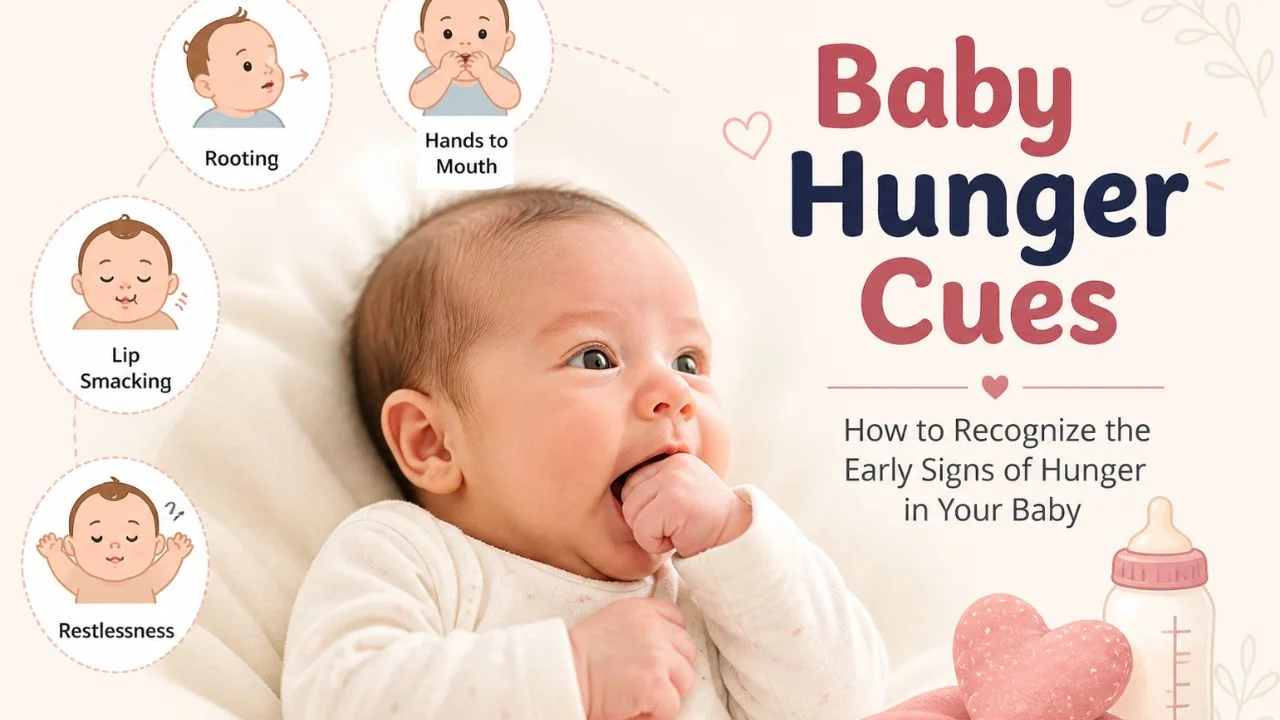
Baby hunger cues are early signals that indicate a baby needs feeding before crying begins. Recognizing them helps parents respond on time and avoid distress.
As a new mother, you may feel unsure about when your newborn is ready to feed and how much they need. However, babies use different hunger cues to communicate their needs, from early signs like rooting and hand-to-mouth movements to later cues like fussiness and crying.
The quicker you learn how to recognise the signs your baby gives about their hunger, the easier it will become for you, especially as many new parents find this stage quite challenging at first. Babies develop an understanding of their own hunger signals over time and many mothers feel more confident regarding communication from their infants after receiving assistance from nursing staff.
What Are Baby Hunger Cues?” (definition only)
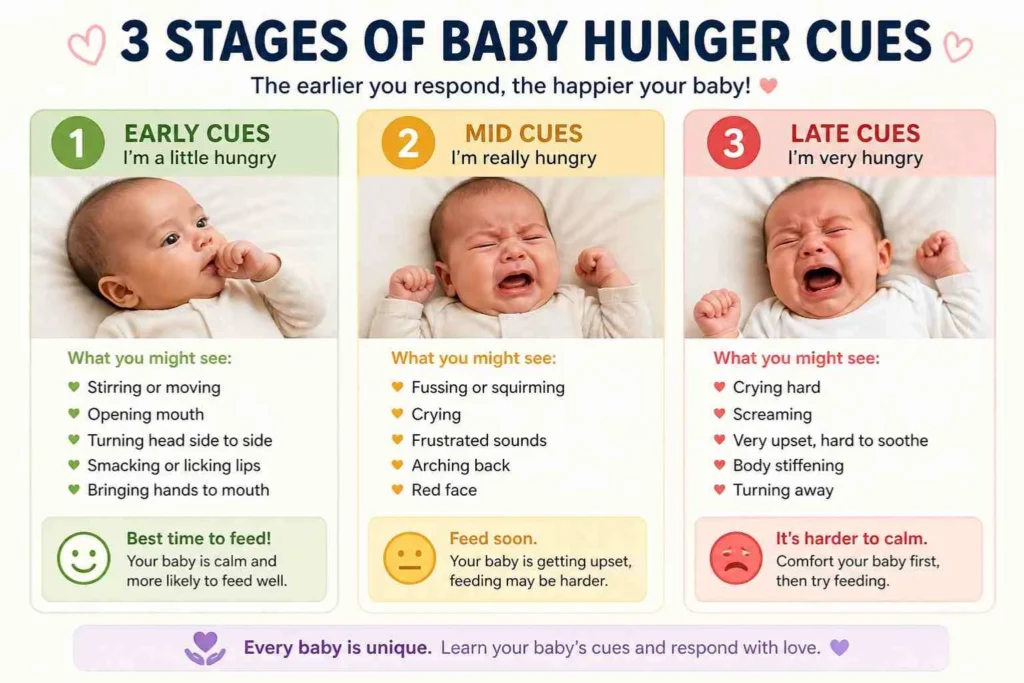
Hunger cues are body movements and behaviors infants use to signal feeding needs. Crying is a late stage cue.
Early Baby Hunger Cues (Before Crying Starts)
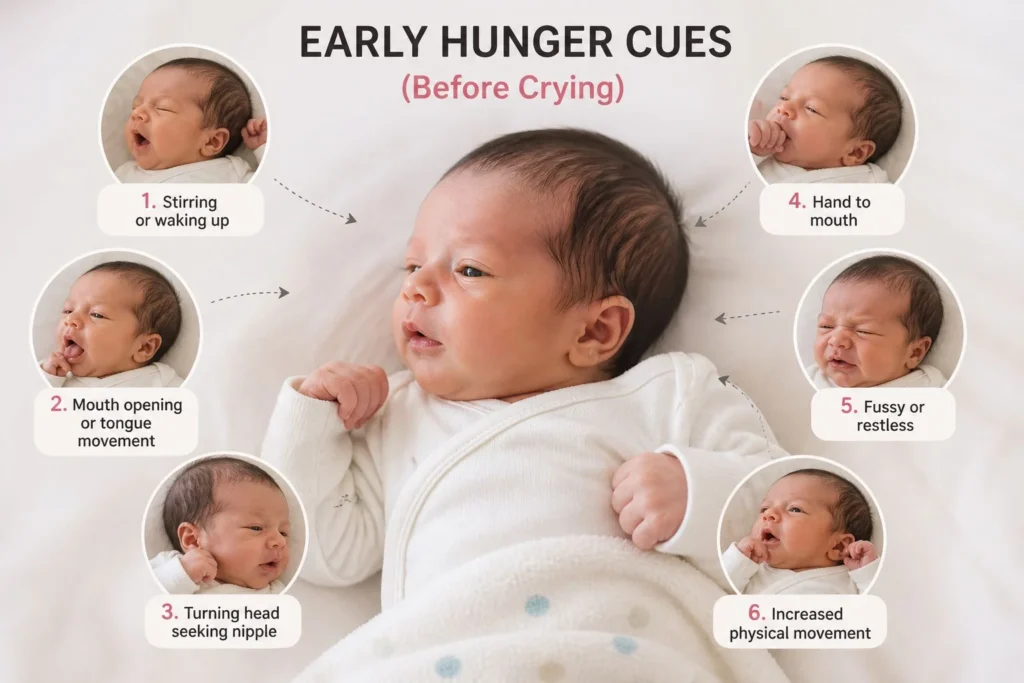
Your baby will show you they are hungry before they cry, using early baby hunger cues. It is very important to respond to your baby at this stage to make feeding easier for both the baby and the mother.
The Following are Key Early Baby Hunger Cues:
Rooting: When a baby turns their head toward the breast or bottle as if searching for milk., when their cheek is touched gently.
Sucking movements: Baby is smacking their lips, licking, and/or sucking their fingers, hands, or feet.
Bringing hands to the mouth: Repeatedly moving the baby’s hands or fists towards their mouth is a sign of hunger.
Mouth opening and closing: Your baby may open and close their mouth, as though they are trying to feed.
Alertness and/or restlessness: Becoming more active, moving while they are sleeping, and/or breathing rapidly.
Mid and Late Baby Hunger Cues
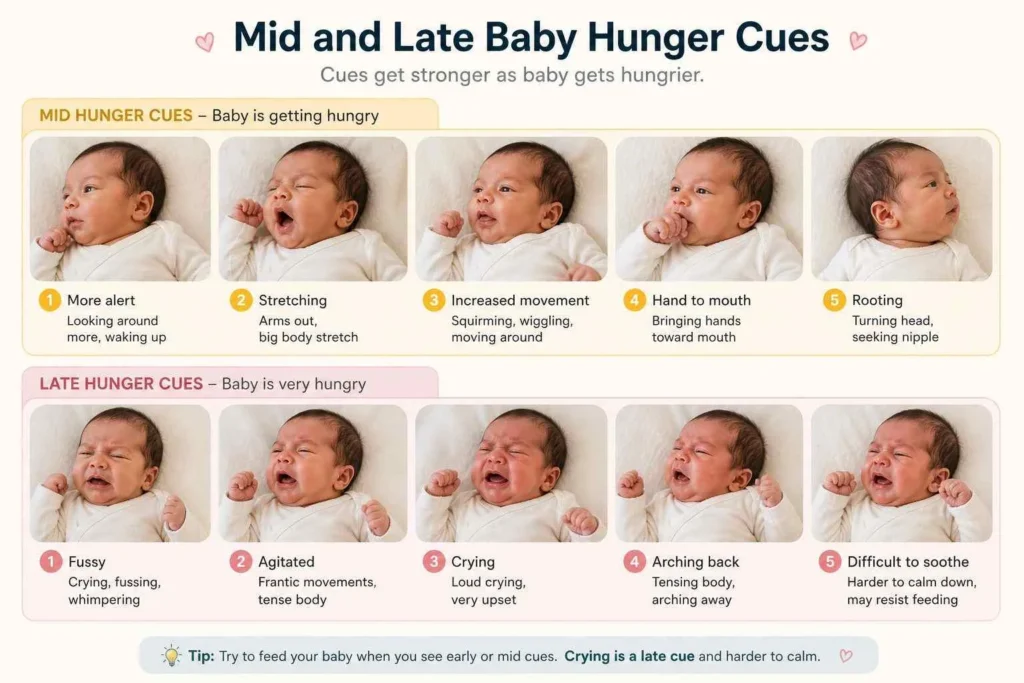
The results of mid and late-stage baby hunger cues reveal how urgent a baby’s need for food becomes if early hunger signals are missed. Mid-hunger stage cues indicate that the baby is getting hungry, however, the baby is still easier to calm during this phase than at the late stage.
Mid-Hunger Stage Feeding Cues (“I’m Super Hungry!”)
- Mouth to hand: The baby sucks on their hands, fingers or clothes repeatedly.
- Fidgeting or moving: The baby fidgets with their body or is much more active than at the start of feeding, with an increased amount of baby stretching and squirming.
- Frantic rooting: The baby moves their head side to side quickly and forcefully to search for milk in the mother’s breast.
- Fussy: The baby whimpers and/or grumbles quietly after they have started to feel upset about being fed.
- Head Bobbing: The baby moves their head around repeatedly trying to find food to eat from your breast.
Late-Hunger Stage Feeding Cues (“Calm Me & Feed Me”)
Crying: The baby is crying loudly and continuously when you try to feed them (this is a very strong sign of hunger).
Agitation: The baby becomes easily upset and extremely agitated and restless when trying to feed them.
Turning red: The baby’s face will appear to be flushed from excessive crying.
Flailing limbs: The baby’s limbs will be flailing around wildly or uncontrollably.
At this stage, feeding becomes more difficult as the baby is already distressed.
Why Do Babies Cry When Hungry?
Crying is the primary and instinctual way for a baby to let their caregivers know they need food or that they are uncomfortable because babies cannot express themselves verbally nor can they indicate what is bothering them. Crying is considered a late hunger cue and is one of the last means of getting attention. This means a baby crying has already experienced signs of hunger prior to crying, which have gone unrecognized and therefore too much time has passed leading to the baby’s distress, which may have been missed earlier.
The baby used crying as its signal for immediate help and receiving what they need to survive. Because a newborn’s stomach is extremely small, it has a high frequency of needing food, therefore when they cry, it will be their default response to call out for help and for the care that they need in order to meet their basic needs.
As children grow older, crying patterns also change. For example, toddlers may cry due to emotional needs like wanting their mother or waking up confused from sleep.
Types of Baby Cries Related to Hunger
When you hear your baby’s cry it is like trying to learn a new language! All babies are unique; however, crying due to hunger is one of the leading reasons for crying during the early months of life. If parents pay attention to noises in addition to how and when babies cry, they can usually detect feeding needs before they reach the point of extreme discomfort.
Primary Feeding Sounds: Neh
What does Neh mean?
There has been much talk about the sound “Neh” in reference to babies who are hungry. This sound is one of the primary indicators of hunger. According to Dunstan’s baby Language right after sucking. It is a soft, repetitive, and steady sounding “N” type sound.
How the “Neh” sound is made
“Neh” is created by the normal sucking reflex of a baby. The airflow through the baby’s mouth, through its tongue striking the roof of its mouth, creates the “N” sound.
How the “Neh” sound evolves over time
When a baby first starts to make the “Neh” sound it is very quiet and relatively soft sounding. If a baby does not get fed, the “Neh” sound will progressively become louder and more anxious in tone, (around 2–3 years old tantrums may also appear as emotional crying rather than hunger-related signals).
Common Mistakes Parents Make When Baby Cries from Hunger
Parents often miss the early signals of hunger in their babies, which can make feeding more difficult, especially when they notice babies always hungry patterns.
Mistakes to Avoid
1. Waiting for Crying
Most parents do not realize that a baby will cry as a late warning sign of hunger; prior to crying, a baby will often show early symptoms such as rooting for food, sucking their fingers or doing lip movements, etc. Waiting until your baby cries could result in distressing your baby even more so by waiting.
2. Forcing the Baby to Eat
When you force your baby to finish their formula when they are no longer hungry, you could be causing the baby discomfort. Some full signs are turning away from the bottle, slowing down their sucking, and falling asleep during a bottle.
3. Misinterpreting the Cry
Babies do not cry exclusively due to hunger. They could be crying for tiredness, gas, or discomfort.
4. Not Burping Your Baby Properly
If your baby is not burped properly after a feeding, the baby could experience gas pain and continue to cry.
5. Following a Strict Feeding Schedule
Newborns should be fed based on hunger cues or on demand rather than on a specific time schedule.
How to Respond to Baby Hunger Cues
- Be aware of your babies early signs of hunger (hand-to-mouth movement)
- Try to stay calm and patient while caring for your baby
- Attempt to soothe your baby prior to feeding if they appear extremely upset.
- Stop feeding your baby when you see signs of fullness.
- You should feed your newborn on demand in the early months of life.
FAQs
How do I know if my baby is hungry or just crying?
Look for early baby hunger cues like rooting, sucking motions, and hand-to-mouth movements before crying starts.
What does a hunger cry sound like?
A hunger cry is usually rhythmic, repetitive, and increases in intensity over time.
Can babies cry for reasons other than hunger?
Yes, babies may cry due to tiredness, discomfort, or pain, but hunger is one of the most common reasons.
Should I wait for my baby to cry before feeding?
No, because crying usually appears after earlier hunger signals have already started.
How often do newborns show hunger cues?
Most newborns show hunger cues every 2–3 hours, but this can vary for each baby.
Conclusion
By understanding your baby’s hunger cues, you can meet their needs promptly and with assurance. When you identify early signs and know the sounds of the different cries your baby gives, it will decrease their crying, enhance their feeding, and create a more peaceful atmosphere.
Parents miss the early signals of hungThis article covers common behaviors of infants and general parenting advice. You should seek professional guidance from a pediatric healthcare provider for individualized support.